

• The Science of Happiness and the Mystery of You

    Welcome to Happy and You Know It.

    Your Resource for Happiness Insights | Researcher | Author in Progress

    Mark Jamieson PhD MBA

    Doctor of Happiness

  • What I Do.

    Research | Writing | Presenting

    Research
    My work is research-based and has led to some different conclusions about happiness than most prevalent accounts, but recognized by almost everyone.: I asked people what their experience is, rather than starting with a theory. There was a stomg coherence to the answers: happiness truly does come from within. These findings have been published in the Journal of Humanistic Psychology. I’ve found that happiness is less about something we achieve, and more about something that returns: we reconnect to ourselves, and happiness re-emerges.

    You can see the article here:

    Beyond pleasure and purpose: The state of being theory of happiness

    Writing
    I share this work in plain language - accessible to everyone. You can follow the writing on Substack and LinkedIn, and soon through a book: Happy and You Know It. There is also a YouTube Channel.

    Linked In

    Substack

    YouTube

    Presenting
    I present through talks, workshops, and conversations. It isn’t a lecture, it’s a shared inquiry—an opportunity to explore what happiness really is, experience it, then examine what gets in the way, and what helps it return.

  • Section image

    Doctor of Happiness?

    Yes — in the literal sense. My doctorate (PhD) is in Psychology, and my research focused explicitly on happiness.

    I’ve studied what people mean when they say “happiness,” and what supports it in lived experience. The work has been published in the Journal of Humanistic Psychology and it forms the basis of my upcoming book Happy and You Know It.

    Studying Happiness

    My initial degree was a Bachelor of Science in Psychology, where I studied under one of the pioneers of happiness research, Professor Richard Kammann. Professor Kammann established one of the founding principles of happiness research, that external conditions had little effect on our happiness. He claied that there must be an underlying factor, a single source of happiness. Sadly he died far too early, just as psychology was starting to take happiness seriously.

    MBA?

    I did what many psychology graduates did: went into industry, beginning with IBM, and then a number of international tech companies, . This led to a career as a Management Consultant and Project Director, working on projects and assignments across the world. I picked up an MBA on the way. I know the pressures of the workplace, the focus on results and the conditions most people work under. I call this my applied psychology phase. I kept on wondering if there was an underlying cause of happiness, underneath the chaos and pressure.

    Back to School

    I was fortunate at the end of that career to be able to return to academia, and to blend my work and life experience back to my first love, the study of psychology. I studied psychotherapy, and then took the opportunity to do what I always wanted to do: formally study happiness at a doctorate level, and see if I could fins out more about the source of happiness is. I remember when I started my analysis after the results came in, and one consistent factor stood out. I remember the shock, the headiness, and the double and triple checking. I was definitely on to something.

    You can tell from the photograph that I have lived a little. I feel this helps provide a practical perspective on the field of happiness. I have gone through most phases of life. My approach is always aimed at how people of all walks of life can reclaim what they always had inside their their happiness.
  • Section image

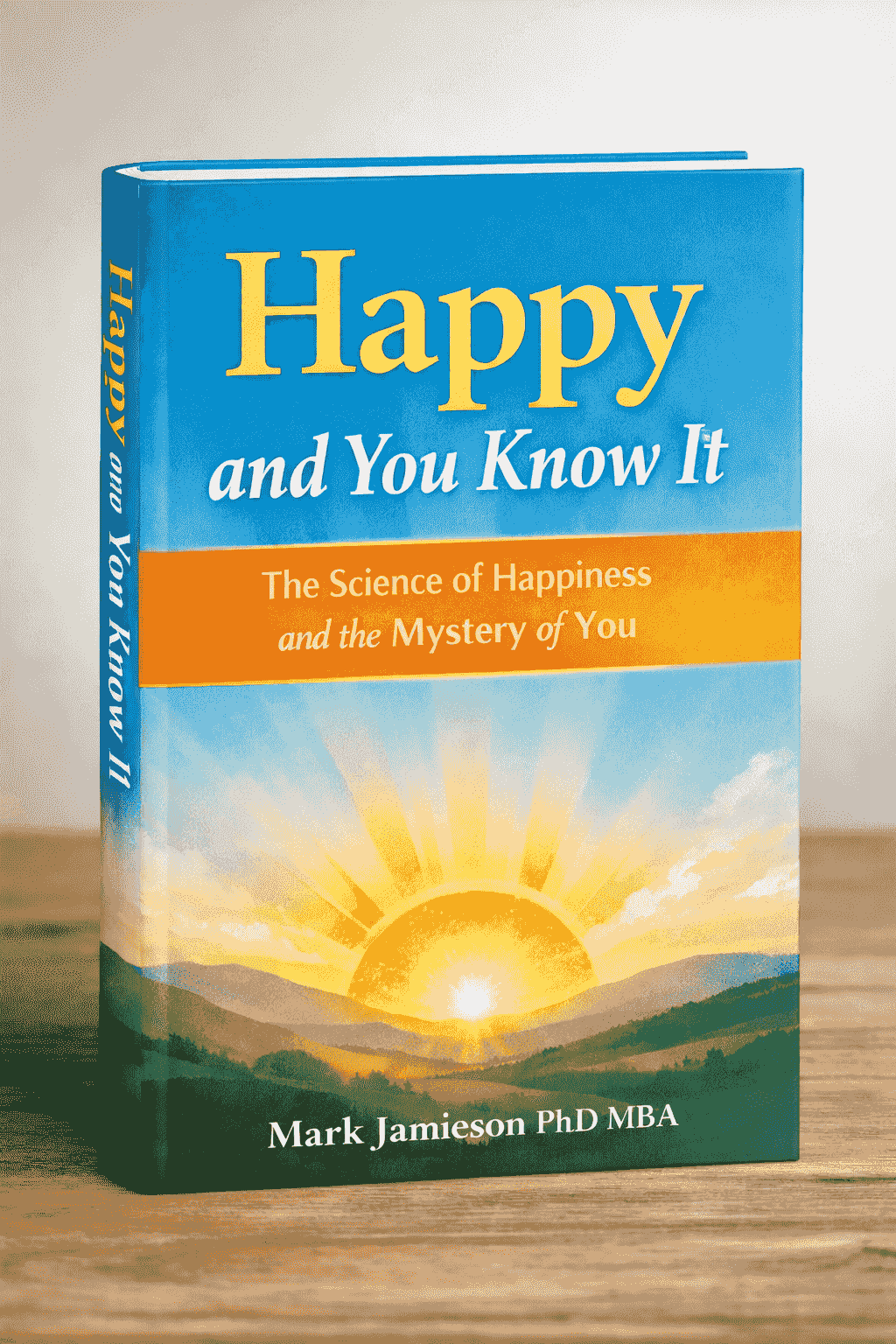
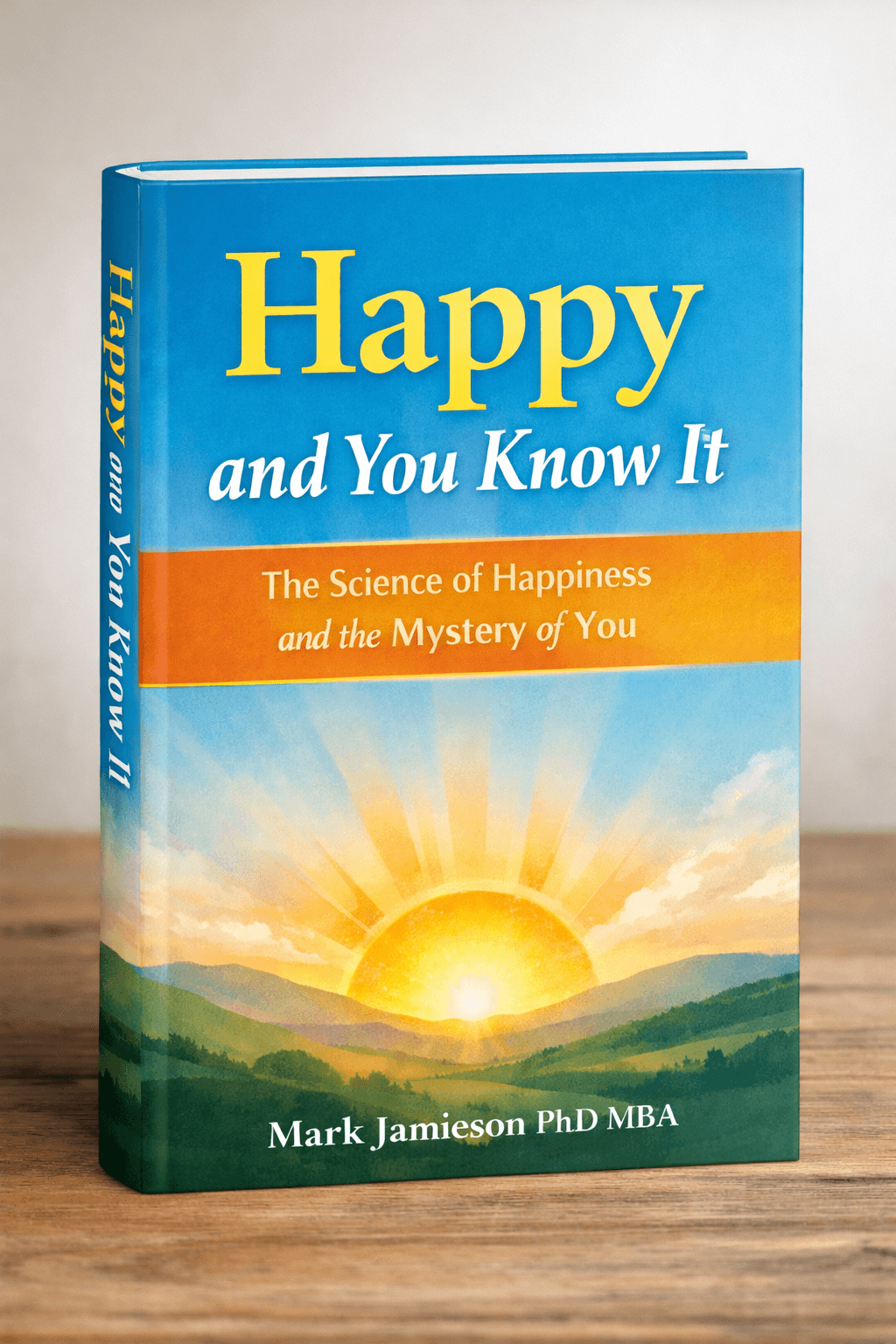
    Happy and You Know It | coming soon

    The Science of Happiness and the Mystery of You
    This book brings together two fundamental perspectives. First, there is a science of happiness. We can study what people mean by happiness, what predicts it, and what tends to undermine it. My research—published in the Journal of Humanistic Psychology—points to a clear pattern: happiness is less something we achieve, and more something that returns when we reconnect to ourselves.

    Second, there is the mystery of you. Happiness isn’t a generic outcome. It arises in a real human life—shaped by temperament, relationships, grief, longing, and your inner world no one else can fully see. This book doesn’t try to replace that mystery with advice, it offers a mirror: real-life narratives and situations of people finding their way back to happiness.

  • What is Happiness

    Beneath the changes of mood and circumstance, there is a quieter condition we can return to. In my research, people described happiness as contentment, connection, and inner alignment—felt as peace, and expressed as joy.


    What causes it? Not perfect circumstances, but inner coherence: Happiness isn't something we manufacture or achieve, it is closer to the nature of our being - what remains when inner conflict settles and we are not pulled away from ourselves. People talked about being truly themselves. They reconnected to a natural balance and ease within, They were no longer battling themselves and the world,

    What happened? The stories had a common theme: Happiness didn’t disappear; it became covered over. We learned to look outward for what can only be known inwardly, and we became identified with thought, story, and the need to manage ourselves. Over time, busyness, striving, comparison, control, and distraction replace connection and coherence.

    How do we return? Not by achieving more, but by reconnecting. We return through presence—pausing, coming back to the body, and meeting experience as it is, without immediately trying to fix it. We soften the inner war, tell the truth about what matters, and make small, honest choices that restore alignment. In that return, happiness isn’t manufactured; it is recognised as the nature of our being.

    We are human beings, after all,

  • Want to contact us? Send a message here.

  • Keep In Touch

    Subscribe for updates

  • Preview the Book

    Review the Introduction and Chapter 1

    Let us know what you think